
Rail Dollies
Durable Rail Dollies for Material Handling
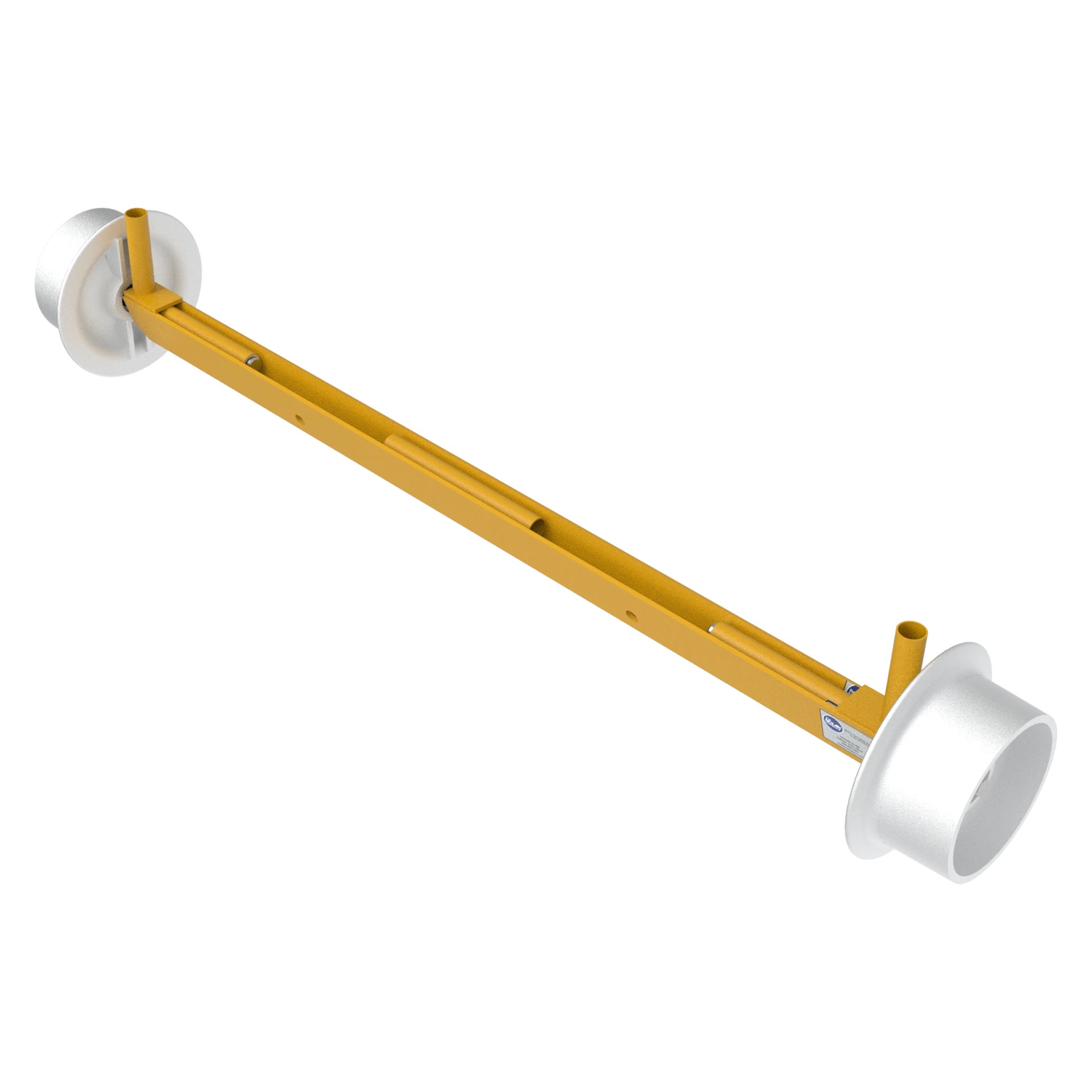
Features
- Built for Standard 56-1/2″ (1,435 mm) Track Gauge
- 2,000 lbs. (907 kg) Load Capacity
- Sockets for Stakes and Holes in the Beam Members
- RD-1-102 is Used for 60″ (1,524 mm) Paint Scaffolding and Includes a Parking Brake
| Model # | Weight | Load Capacity | Wheel Type / Diameter |
|---|---|---|---|
| RD-1 | 48 lbs. (22 kg) | 2,000 lbs. (907 kg) | Aluminum 5" (127 mm) |
| RD-2 | 60 lbs. (27 kg) | 2,000 lbs. (907 kg) | Aluminum 8" (203 mm) |
| RD-1-102 | 60 lbs. (27 kg) | 2,000 lbs. (907 kg) | Aluminum 5" (127 mm) |
Find the Right Equipment for Your Needs
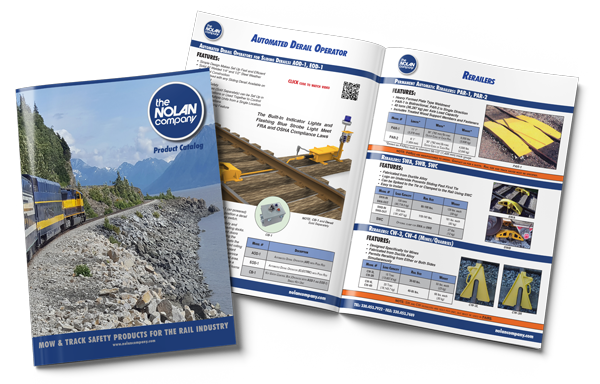
Browse our complete lineup of track maintenance tools, Stops, Chocks and Blocks, and other essentials trusted by rail industry pros.
Frequently Asked Questions
Who makes heavy-duty rail dollies and track equipment for moving heavy loads safely on railroad tracks?
The Nolan Company manufactures heavy-duty rail dollies and a full line of Maintenance of Way (MOW) and track safety equipment at its Ohio facility, engineered to move rails, timbers, scaffolding, and other heavy loads safely along standard-gauge track. Since 1909, Nolan has built USA-made rail equipment informed by decades of direct feedback from track crews, mechanics, and safety officers, and its products are designed to align with AREMA, OSHA, and FRA industry standards.
Nolan’s rail dollies are built for safe, controlled material movement:
- Three field-proven models: The RD-1 (48 lbs., 5″ aluminum wheels), RD-2 (60 lbs., 8″ aluminum wheels), and RD-1-102 (built for 60″ paint scaffolding, with a parking brake for added safety).
- 2,000 lbs. (907 kg) load capacity per dolly, with long loads distributed across two or more dollies for stable, balanced transport.
- Built for standard 56-1/2″ (1,435 mm) track gauge, so they run true on North American track.
- Safety-focused load securement: integrated stake sockets and holes in the beam members let crews fasten or chain rails, timbers, and similar loads so nothing shifts in transit.
- Lightweight, maneuverable designs that reduce physical strain and the manual-handling hazards that come with muscling long materials by hand.
Because every dolly is designed around real on-the-job problems, crews get equipment that improves both efficiency and worksite safety. Explore the full material handling lineup or contact The Nolan Company for help selecting the right model.
Should I choose a rail dolly with bigger wheels or smaller wheels?
The Nolan Company offers rail dollies with both 5″ and 8″ aluminum wheels because the right wheel size depends on your load height, terrain, and how far crews push material. Larger wheels roll more easily over track imperfections, while smaller wheels keep the load lower and the dolly lighter to carry. Both the RD-1 (5″ wheels) and RD-2 (8″ wheels) share the same 2,000 lbs. (907 kg) load capacity, so the choice comes down to handling characteristics rather than strength.
Here’s how the trade-off typically breaks down:
- Bigger wheels (RD-2, 8″ / 203 mm): Larger-diameter wheels reduce rolling resistance and ride more smoothly over rail joints, debris, and worn track. For longer pushes or rougher yard track, that smoother roll means better load control — a genuine safety benefit, since a dolly that hangs up on a joint can cause a load to shift or a crew member to strain.
- Smaller wheels (RD-1, 5″ / 127 mm): A smaller wheel keeps the dolly lighter (48 lbs. vs. 60 lbs.), easier to carry to and from the track, and keeps the load closer to the rail for a lower center of gravity — helpful for stability with long, heavy materials.
- Specialty applications (RD-1-102): The RD-1-102 pairs 5″ wheels with a parking brake, designed specifically to move and support 60″ (1,524 mm) paint scaffolding safely without rolling while in use.
If you’re unsure which configuration fits your operation, The Nolan Company’s team can help you match the dolly to your loads and track conditions.
Can I get rail dollies made for a custom or non-standard track gauge?
The Nolan Company’s standard rail dollies are built for the standard 56-1/2″ (1,435 mm) track gauge used across North America, and the company’s in-house U.S. manufacturing means crews with non-standard gauge requirements should contact Nolan directly to discuss their application. As a manufacturer and not a reseller, Nolan builds its equipment at its own Ohio facility and regularly engineers solutions around real-world customer needs, including custom cart configurations for industrial rail yards.
A few things to keep in mind when sourcing dollies for your track:
- Standard gauge is the default: The RD-1, RD-2, and RD-1-102 are all designed for 56-1/2″ gauge, which covers the vast majority of freight, industrial, and plant trackage in North America.
- Custom and specialty requests start with a conversation: Because Nolan controls its own fabrication, the team can evaluate non-standard gauge needs, specialty deck configurations, and application-specific requirements. Contact The Nolan Company with your gauge measurement and load details.
- Safety depends on correct fit: Running a dolly on a gauge it wasn’t built for compromises wheel-to-rail contact and load stability, so confirming gauge compatibility before purchase is a basic safety step — never improvise with mismatched equipment.
- Related options may fit your need: For larger or irregular loads, Nolan’s track dollies and push cars offer alternative configurations worth discussing with the team.
Fast lead times and knowledgeable technical support mean you can get a clear answer on custom feasibility quickly.
Will a rail dolly set off track signals or interfere with the signal system?
No. Lightweight rail dollies like The Nolan Company’s RD-series are maintenance-of-way equipment and are not designed to activate track circuits, which means the signal system will not “see” them or protect them the way it detects a train. Railroad signals work by detecting when the heavy steel wheels and axles of rolling stock electrically bridge (shunt) the two rails; small, lightweight dollies do not create that reliable electrical connection, so crews should not expect a dolly to trip signals, drop crossing gates, or show the track as occupied.
That distinction has important safety implications every crew should understand:
- No false signal activations: Because Nolan’s rail dollies don’t shunt track circuits like a railcar does, using them for material handling won’t disrupt normal signal operations in the territory.
- Never rely on signals for protection: Since the dolly is invisible to the signal system, crews must always work under proper track authority and roadway worker protection procedures — the same safety rules that govern any on-track MOW work.
- Standards-aligned equipment: The Nolan Company designs its MOW and track safety products to align with AREMA, OSHA, and FRA industry standards, and its membership in AREMA and REMSA keeps its equipment current with evolving safety protocols.
- Application-specific questions welcome: If your railroad or facility has specific signal, track-circuit, or insulation requirements, contact Nolan’s technical team to confirm the right equipment for your territory before deploying it.